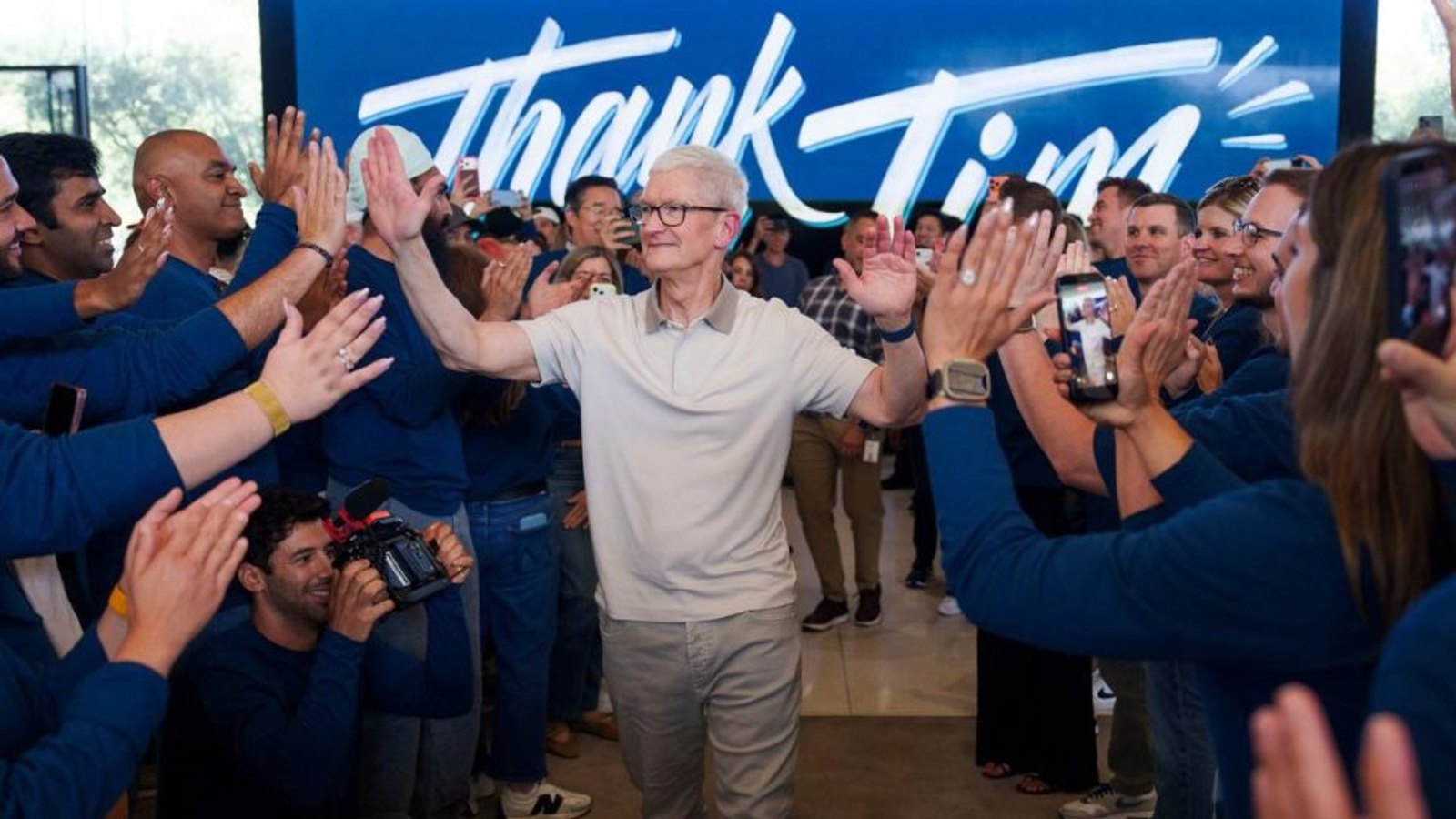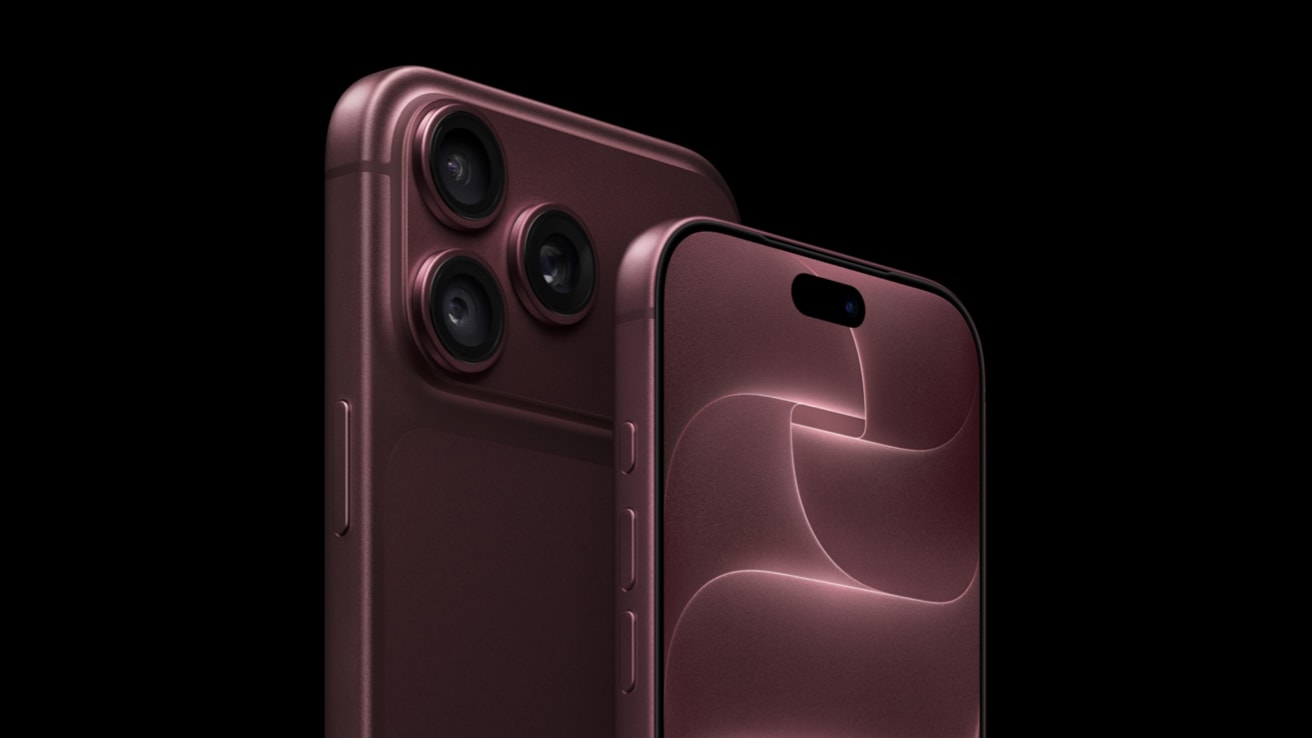
Apple announced iPhone 18 Pro and iPhone 18 Pro Max on 9 September 2026, at an event it called Surprise and shine — the first since the change at the top that we covered a week earlier.
Prices are 1,199 dollars and 1,299 dollars. Pre-orders opened 12 September, general availability is 18 September across more than 65 countries, with about 20 more on 25 September. Storage runs 256GB, 512GB, 1TB and 2TB. Colours are black, silver, glacier and burgundy.
That is the press release. The more interesting reading is the spec sheet, and specifically the fact that there is more than one of it.
Apple's US page and Apple's UK page disagree about the battery
From apple.com/iphone-18-pro/specs, the US page:
| Model | Video playback | Streamed video | Typical use |
|---|---|---|---|
| iPhone 18 Pro | Up to 36 hours | Up to 33 hours | Up to 24 hours |
| iPhone 18 Pro Max | Up to 45 hours | Up to 40 hours | Up to 30 hours |
From apple.com/uk/iphone-18-pro/specs, the same two phones:
| Model | Video playback |
|---|---|
| iPhone 18 Pro | Up to 34 hours |
| iPhone 18 Pro Max | Up to 43 hours |
Two hours apart, on both models. And the physical specifications on the two pages are identical: 8.75 mm deep, 211 grams for the Pro and 249 grams for the Pro Max, same display, same chip.
The reason is on the SIM line. The US page says the phone "uses advanced eSIM technology" and is "not compatible with physical SIM cards". The UK page says "Dual SIM (nano-SIM and eSIM)".
Apple states the mechanism plainly in the press release footnote:
"eSIM-only models of iPhone 18 Pro Max feature the largest increase in battery life on an iPhone by taking advantage of the space formerly occupied by the physical SIM."
So the tray is not merely absent. Its volume has been given to the cell. Two hours of video playback is what a nano-SIM tray costs, measured by the vendor, in a chassis whose external dimensions did not change.
Why this is worth more than a footnote
The number that will be repeated for the next year is 45 hours. It is Apple's own figure and it is not wrong. It describes a build sold in roughly a dozen countries and regions, including the United States, Canada and Japan.
Most of the world — the UK, the rest of Europe, and elsewhere — buys the 43-hour phone. In China the device supports two nano-SIMs, one nano-SIM plus an eSIM, or two eSIMs, which is a third configuration again.
Nothing here is concealed. Both figures are published, on Apple's own domain, by the same company, and either page is one click away. But only one of them is the marketing number, and no regional page carries a footnote explaining that the phone next to it in another country lasts longer. You have to already know to compare.
This is the practical form the eSIM transition now takes: not an announcement, but a divergence in the spec sheet that follows the tray around the map.
The modem is Apple's now, and the energy figure is the one to keep
The Pro line ships with the Apple C2 cellular modem. Apple's wording:
"C2 delivers meaningfully faster uploads when compared to C1X while consuming 15 percent less energy, and now supports mmWave in the U.S."
Two things in that sentence.
The first is 15 percent less energy than C1X. A cellular modem is close to the top of the list of things that drain a phone that is sitting in a pocket doing nothing, because it is the part that never stops. A cut there compounds with the extra cell volume rather than competing with it — two independent improvements pushing the same figure.
The second is mmWave in the US, which matters because of what was reported before launch and did not happen. Through July 2026, reporting held that C2 would lack mmWave and that US iPhone 18 Pro units would therefore keep a Qualcomm modem while the rest of the world got Apple silicon. Apple shipped C2 with mmWave, in the US, across the line. Whatever the internal history, the split that was widely expected is not in the product.
Alongside it: the N1 wireless chip for Wi-Fi 7, Bluetooth 6 and Thread, and Apple's second-generation Ultra Wideband chip. The radio stack on this phone is now overwhelmingly Apple's own design.
The thermal number is quoted in sustained terms, which is unusual
"With new materials and three times more surface area than the previous generation on iPhone 17 Pro, the redesigned vapor chamber dramatically improves sustained performance and enables up to a 40 percent gain over the previous generation."
Note what is being claimed. Not a peak benchmark — sustained performance. Phone silicon has been thermally limited rather than clock limited for years: the interesting question has long been not how fast the chip goes but how long it stays there before it throttles.
A vapor chamber with three times the surface area is a straightforward answer to that, and quoting the result as a sustained gain is the honest way to quote it. The A20 Pro underneath is built on a 2-nanometer process, with a 6-core CPU, a 7-core GPU and a dual 16-core Neural Engine.
Apple does not publish the RAM figure, and it does not publish battery capacity in milliamp-hours. Any number you see for either is somebody else's teardown, not Apple's specification.
Apple Reference Image signs the sensor, and then phones home
The camera feature with the longest tail is not the variable aperture, though that is real — six laser-cut blades giving ƒ/1.48, ƒ/1.8, ƒ/2.8 and ƒ/4.0 on the 24 mm Main camera, alongside a 13 mm ƒ/2.2 Ultra Wide and a 100 mm ƒ/2.8 4x Telephoto.
It is this:
"When a photo is taken in the new Reference mode, the camera captures signed sensor data that Private Cloud Compute develops into an unalterable reference image."
The signing happens at the sensor, at capture. Verification does not happen on the device: the raw image, the sensor signatures, the capture timing and the sensor's hardware identifiers go to Apple's Private Cloud Compute, which decides whether the camera really took the picture and returns an authenticated version.
That is a deliberate architectural choice, and it is the opposite of the usual one. Chromium's Secure Preferences integrity values were forgeable precisely because the check was local — anything a device can verify by itself is something an attacker with that device can eventually learn to satisfy. Moving the check to a server the attacker does not hold closes that.
It also means image provenance now depends on Apple's servers being reachable and willing. And Apple has not joined C2PA Content Credentials, the standard Nikon, Canon and Google's Pixel line use, so a Reference image is verified by Apple or not at all.
What Apple confirmed, and what is only claimed
Confirmed by Apple: everything above with a figure attached to it, all of it from the two newsroom releases and the US and UK spec pages.
Not from Apple: the RAM figure, battery capacities, the pre-launch reporting on a Qualcomm and C2 regional split, and every teardown-derived number that will appear over the next fortnight.
What is not established
- Battery capacity in milliamp-hours for either build, so the two-hour delta cannot be converted into a volume.
- Whether the eSIM-only footprint expands at the next revision, or stays where the regulators leave it.
- What Reference mode costs in capture latency, storage, or availability when Private Cloud Compute cannot be reached.
- Whether any third party will be able to verify a Reference image, or whether verification stays inside Apple.
- Sustained performance in independent testing. The 40 percent figure is Apple's, against its own previous generation, under conditions it has not described.