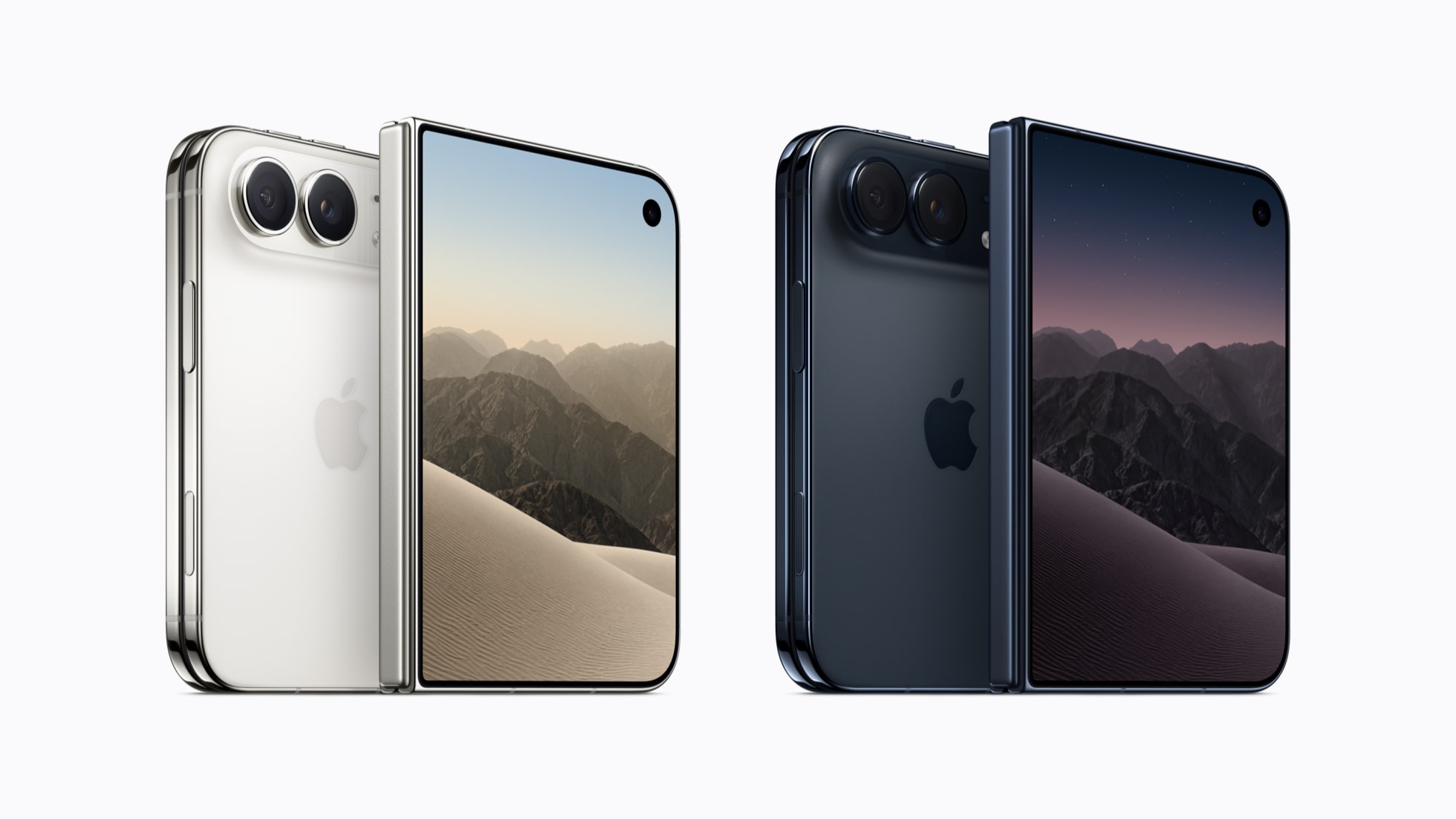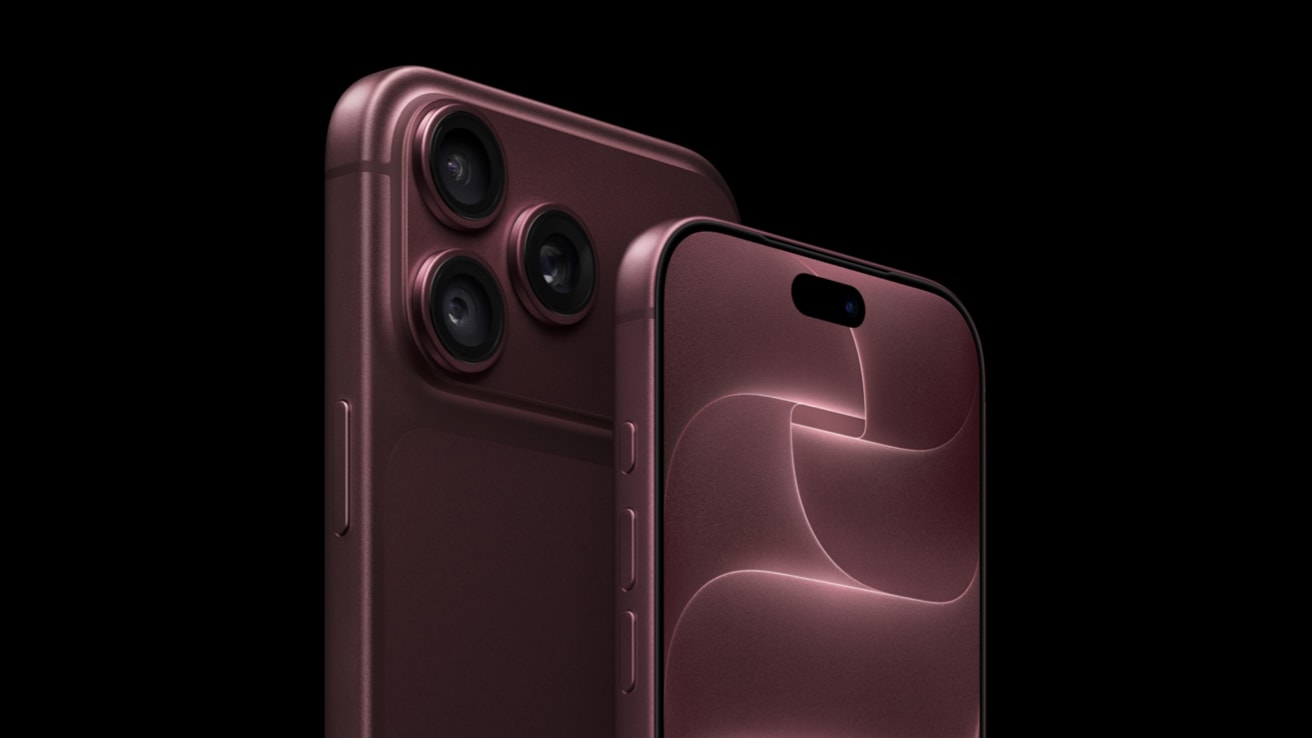
Apple introduced iPhone Duo on 9 September 2026 — the first foldable iPhone, and at 1,999 dollars for the 256GB model the most expensive iPhone the company has ever sold. Pre-orders open 16 October, availability is 23 October in more than 70 countries, with 28 more regions on 30 October. Two colours: star white and night sky.
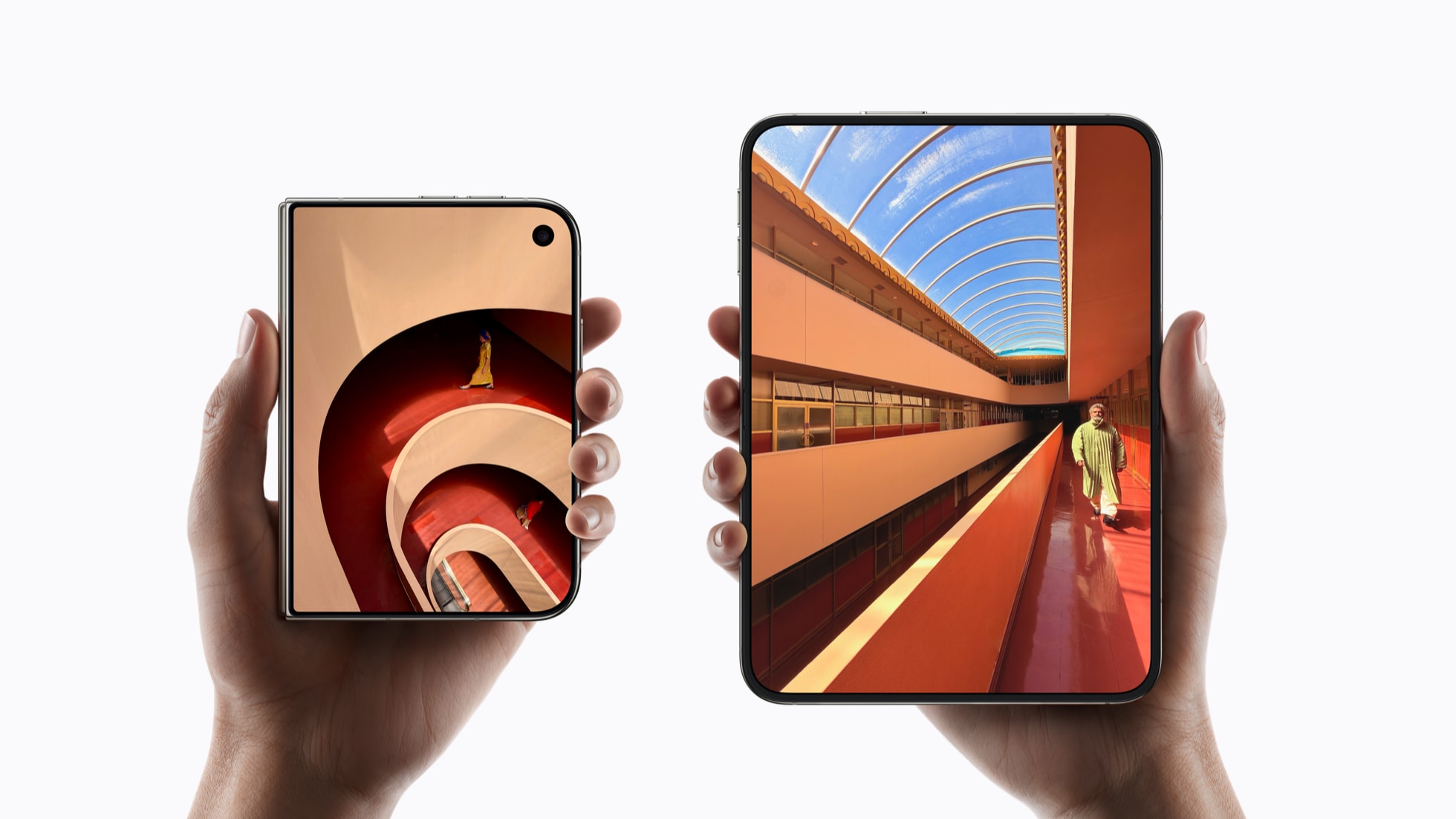
The hardware is genuinely difficult work. Unfolded it is 5.2 mm thick with a 7.6-inch inner display; folded it is 11.3 mm with a 5.4-inch outer display; it weighs 254 grams. The hinge is Grade 5 titanium, mirror-polished, and Apple says it is "engineered from more than 100 components", supporting the centre of the display with an integrated magnet array. The inner panel has a nano-texture finish to cut glare, which is a first on an iPhone.
And it authenticates you with a fingerprint.
There is no Face ID on it. Anywhere.
The spec sheet lists "Touch ID" and a "Fingerprint sensor built into the side button". Face ID does not appear on the page. The alternative Apple offers is unlocking with an Apple Watch.
This is the first flagship iPhone since 2017 without Face ID, and it is worth being precise about why, because the obvious explanation is the wrong one.
It is not cost. A phone with a hundred-component titanium hinge did not lose a sensor array to save money.
Face ID is not a camera. TrueDepth is an array of 3 parts — a dot projector throwing a structured-light pattern, a flood illuminator, and an infrared camera reading that pattern back — and the depth map depends on them sitting at known, fixed distances from each other. The Duo puts its front camera under the inner display, and a panel designed to bend sits in the light path in both directions.
Apple's spec line calls Face ID "enabled by TrueDepth technology", and its phrasing for the Duo is that the new FaceTime camera "stays hidden when not in use". You can put one camera under an OLED panel and accept the loss in light transmission. You cannot put a structured-light projector under a folding panel and still read the dot pattern back cleanly.
So Touch ID in the side button. The constraint is optical, and it lands on the security model.
Apple publishes both numbers, and they are twenty times apart
From Apple's own Platform Security documentation:
| Biometric | Probability a random person can unlock |
|---|---|
| Face ID | Less than 1 in 1,000,000 |
| Touch ID | Less than 1 in 50,000 |
Apple's own Platform Security documentation puts Face ID at less than 1 in 1,000,000 and Touch ID at less than 1 in 50,000 — the probability a random person can unlock the phone. That is a twentyfold gap, and it narrows in the wrong direction under real use: enrolling five fingerprints raises Touch ID to as much as 1 in 10,000, while Face ID with two appearances enrolled goes to 1 in 500,000.
Most people with a fingerprint phone enrol more than one finger, because that is the point of having them.
Both stop after five failed attempts and demand the passcode, which is the control that actually bounds an attacker in a hurry.
Two honest qualifications. First, these are random-match figures and not a model of a determined attacker; neither number describes how hard the sensor is to spoof deliberately. Second, 1 in 50,000 is a perfectly serviceable number for a phone, and Touch ID has protected hundreds of millions of devices without incident.
But it is the weaker of the two mechanisms the same company sells, on the more expensive of the two devices, and there is no configuration in which a Duo buyer can choose otherwise. Fingerprint and document capture have a long history of being reproduced by people who bothered; a face with a live depth map is harder to hand somebody than a finger is.
The Secure Enclave still holds the template, still never lets it leave, and still does the matching. What changed is what is being matched.
What the fold costs, itemised from Apple's own pages
Setting the Duo against the iPhone 18 Pro Max, which costs 700 dollars less:
| iPhone Duo | iPhone 18 Pro Max | |
|---|---|---|
| Price from | 1,999 dollars | 1,299 dollars |
| Biometric | Touch ID, 1 in 50,000 | Face ID, 1 in 1,000,000 |
| Main camera | 48MP, fixed ƒ/1.6, 26 mm | 48MP, variable ƒ/1.48 to ƒ/4.0, 24 mm |
| Telephoto | None. 2x is a sensor crop | 100 mm 4x ƒ/2.8, 3D sensor-shift OIS |
| Zoom range | 2x optical quality | 16x optical quality |
| Video playback, large screen | 31 hours | 45 hours |
The telephoto line deserves the emphasis. Apple describes an "integrated optical-quality 2x Telephoto" on the Duo, which is a crop from the middle of the 48MP sensor rather than a lens. The 18 Pro has an actual 100 mm telephoto with its own stabiliser. Depth is the reason: a folding half 5.2 mm thick has nowhere to put a folded optical path.
A single cell cannot span a hinge, so the Duo carries a dual-battery architecture, one high-energy cell on each side. It delivers 44 hours of video on the small outer screen and 31 hours on the large inner one — the same pair of cells lighting very different areas. Apple's mixed-use figure is 24 hours, against 45 hours on the iPhone 18 Pro Max that costs 700 dollars less.
What the fold buys, and what Apple did not say
The case for it is the thing itself. A 7.6-inch display in a body that is 5.2 mm thick unfolded, at 254 grams, with ProMotion at 120Hz and 3000 nits of peak outdoor brightness on both panels, is hard engineering, and the closed device still gives you a normal 5.4-inch phone. It is IP68 to 6 metres for 30 minutes, which no foldable had a right to be, and the front is Ceramic Shield 2 with a claimed 3x scratch resistance.
What is missing from the spec sheet is the number every foldable buyer actually wants: Apple has not published a hinge fold-cycle rating. Competitors quote 200,000 or 400,000 folds. Apple quotes a component count and a material, and says the device is built to last.
That is the one place where a spec sheet this detailed goes quiet, and it is the mechanism most likely to decide whether a 1,999-dollar phone is still a phone in three years.
What is not established
- Hinge durability. No fold-cycle figure from Apple, and no independent testing yet.
- Crease visibility on the inner panel. Apple makes no claim either way.
- What the under-display camera costs in image quality against a conventional front camera.
- RAM and battery capacities. Apple publishes neither.
- Whether Face ID returns on a later foldable, which is really a question about under-panel structured light rather than about Apple.
- Repairability. A folding display, a titanium hinge and two batteries have no published service pricing yet.