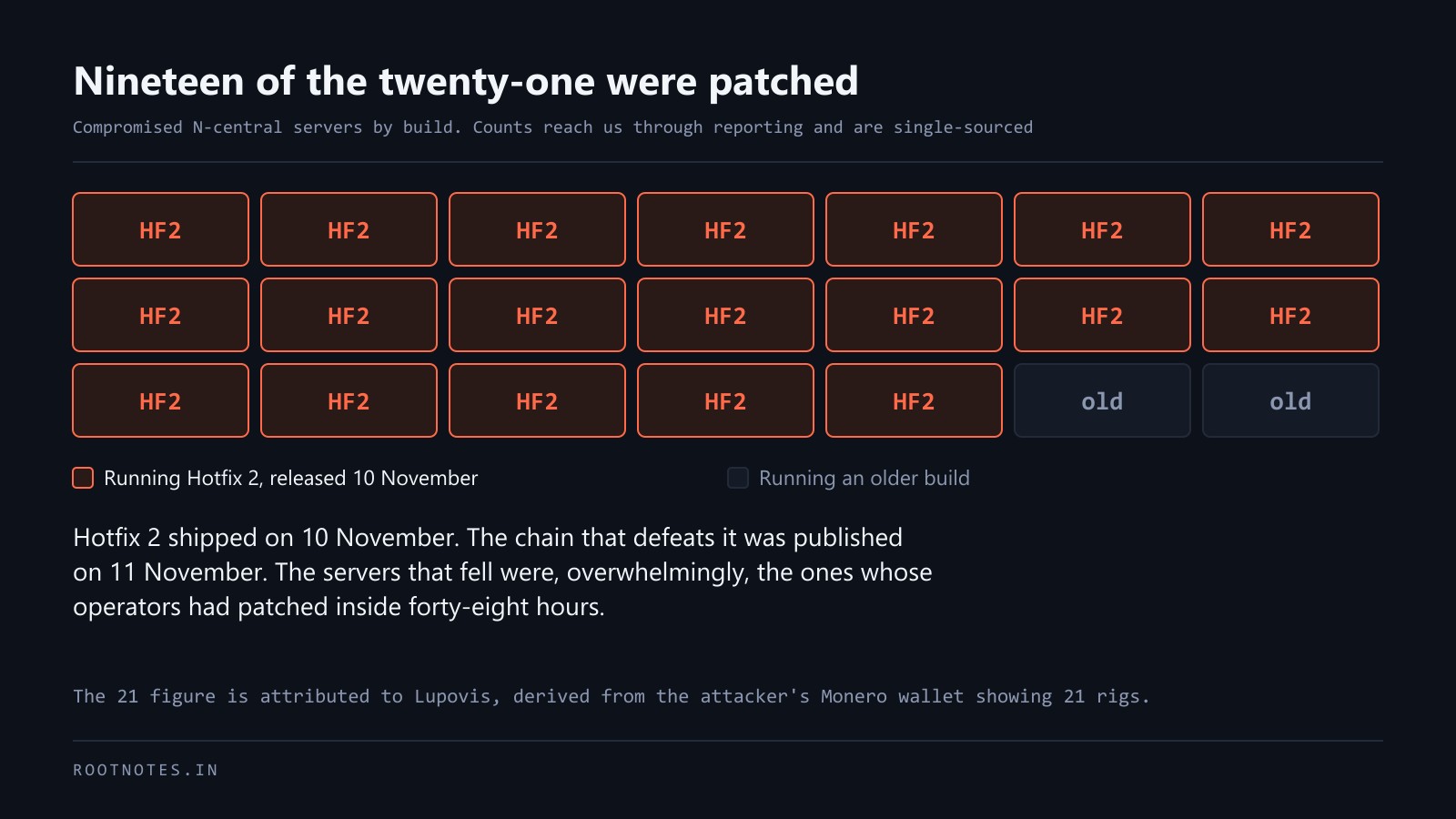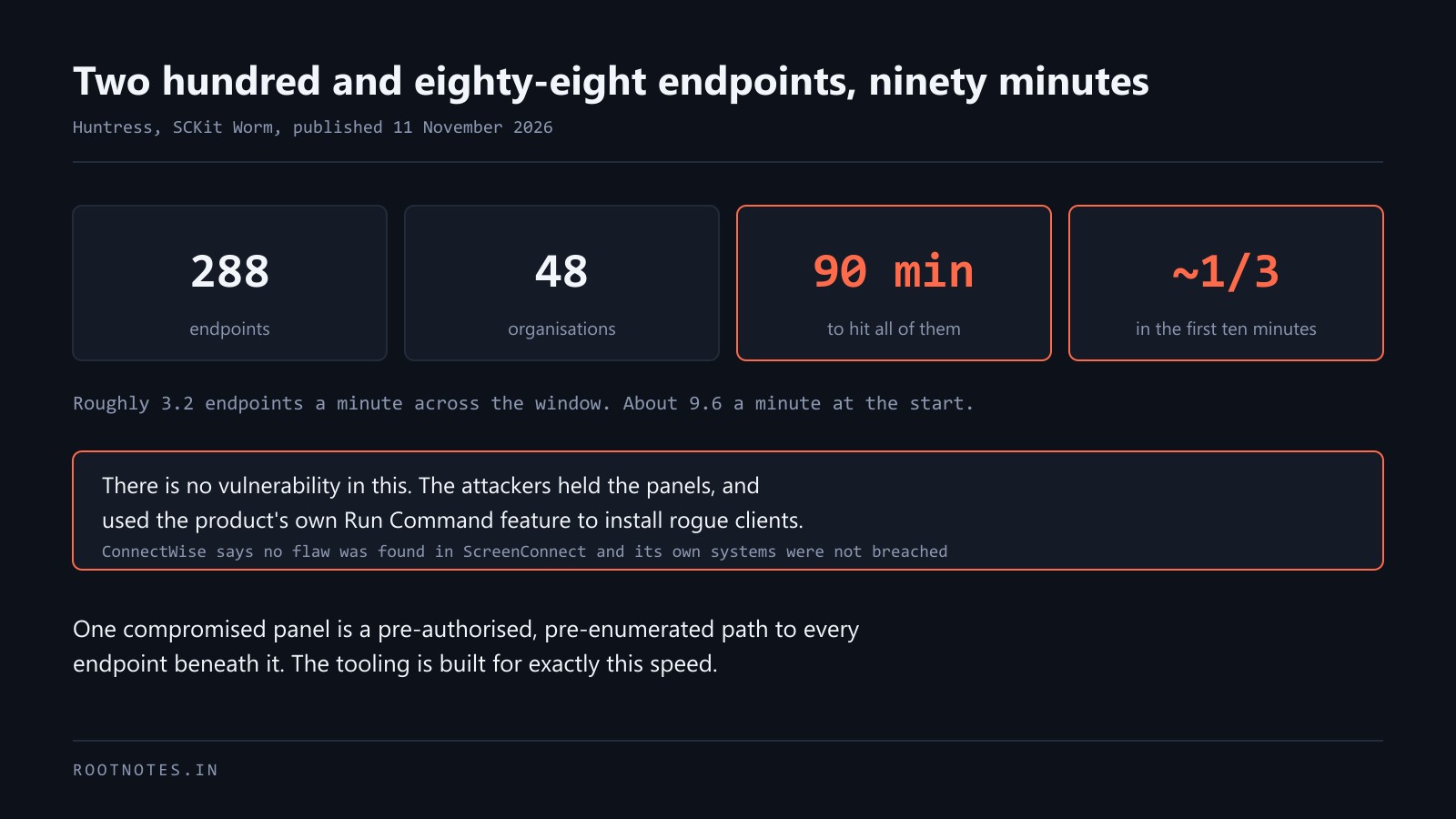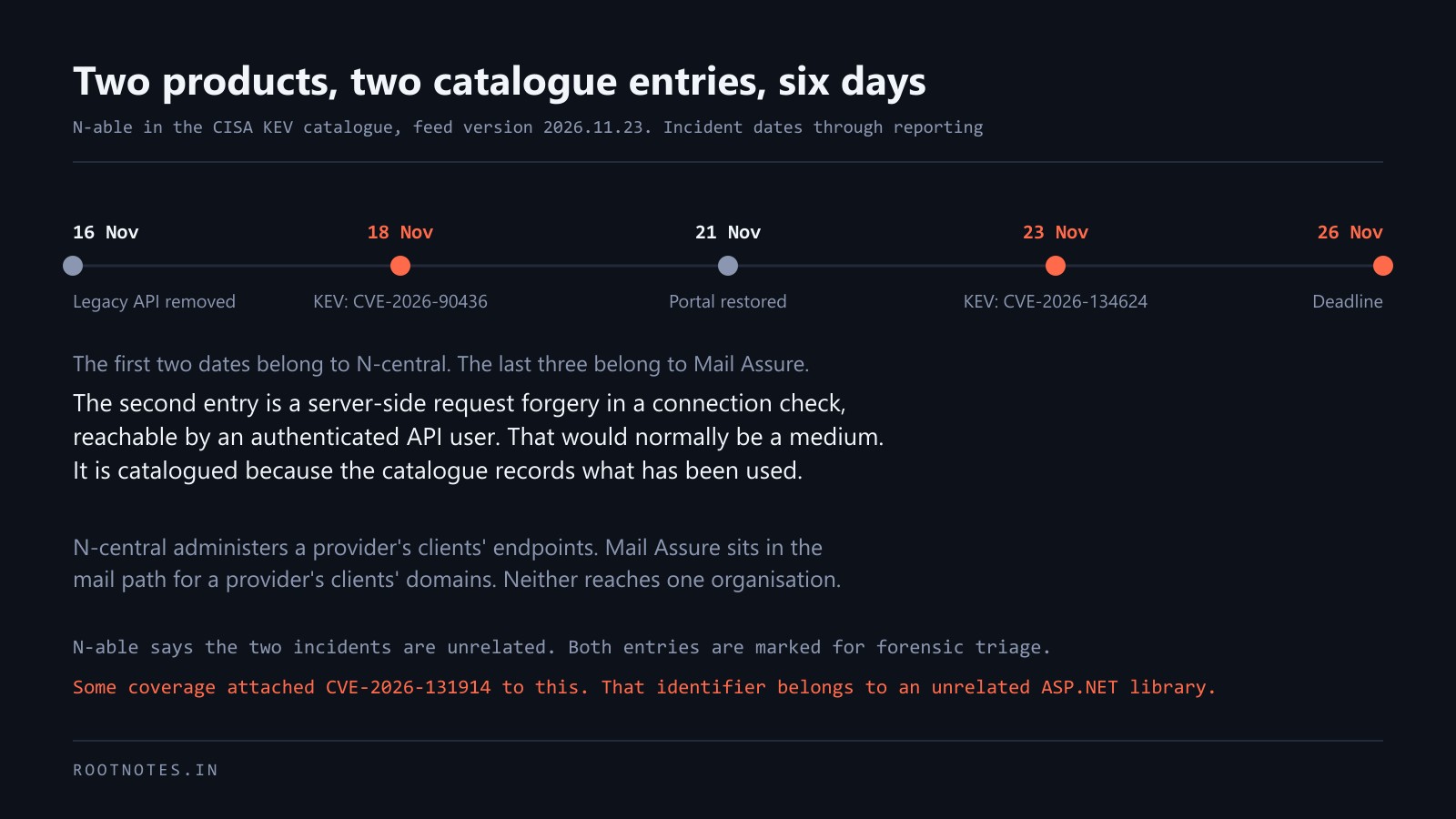
On 18 November 2026, CISA added CVE-2026-90436, the Apache Axis flaw at the head of the chain used against N-able N-central, to the Known Exploited Vulnerabilities catalogue.
On 23 November, it added CVE-2026-134624, a flaw in N-able Mail Assure.
Two products from one vendor, five days apart, both marked for forensic triage, both with three-day deadlines. N-able has said the two incidents are unrelated. Taking that at face value still leaves a vendor that has had two separate products catalogued as exploited inside a working week.
What the second one is
The catalogue's description is precise, and the shape of the flaw is unusual for an entry on this list. It places the weakness in the LDAP synchronization connection check, and says an authenticated API user can use it to reach arbitrary internal hosts and ports, work out which of them are reachable, and send crafted data to whatever is listening.
Unpack that. Mail Assure can synchronise its user list from a customer's directory server. Before it does, it offers to test the connection. The test takes a host and a port from the caller and tries to reach them.
That is a connection-check feature doing exactly what a connection check does. The flaw is that it will do it to any host and port, not only to a directory server, and will report back what it found.
The weakness class is CWE-918, server-side request forgery. The thing an attacker gets is the ability to use the mail platform as a probe inside whatever network segment the platform sits in, and then to push crafted bytes at whatever answers.
Why an authenticated medium is in the catalogue
Most server-side request forgery findings that require an authenticated account would score as a medium and never be heard of again.
This one is in a federal catalogue with a three-day deadline because the catalogue is not a severity list. It records flaws that have been used. The entry carries the forensic-triage marker, which under the current directive means operators are expected to preserve and examine evidence rather than simply patch and move on.
The condition that normally reduces a finding's importance, needing an authenticated API user, reads differently on a hosted multi-tenant mail platform. An API user is an ordinary thing for a customer to have. The question of what that account can reach from inside the platform's own network is a tenancy question, and this flaw answers it badly.
The incident that found it
N-able's public account of the Mail Assure incident has moved more than once.
Reporting describes a disruption first attributed to a configuration issue on 17 November, then attributed to a security incident on 18 November, with the management portal and APIs disabled across the Americas, Asia-Pacific and Europe while mail delivery and filtering continued. N-able is reported to have said the incident was isolated to a single web server, to have taken that server offline, rotated internal platform credentials, revoked customer API tokens, invalidated OAuth tokens and reset local user passwords, and to have engaged an external forensics team. Access to the dashboard and APIs is reported to have been restored late on 21 November.
All of that reaches us through reporting rather than from a document we can read. The vendor's security advisory for the flaw is behind a customer login. What is public and verifiable is the catalogue entry, and the advisory URL, whose own slug names the identifier and the component: the Mail Assure LDAP sync connection check.
The token revocation is the tell
One detail in the reported response deserves attention on its own.
Revoking customer API tokens, invalidating OAuth tokens and resetting local user passwords is not what an organisation does when it is confident nothing was taken. It is what an organisation does when stored credentials sat on a machine it no longer trusts.
That is consistent with the reported statement that an unauthorised party may have reached certain stored credentials, and it is the right action. It is also disruptive in a way that tells customers something the incident updates have not said outright.
The pattern, stated carefully
It would be easy and wrong to write that N-able has a systemic problem, because two catalogue entries in six days is a small sample and the vendor says the incidents are unrelated.
What can be said is narrower and more useful. N-able sells into managed service providers. Both affected products sit at a point of concentration: N-central administers a provider's clients' endpoints, and Mail Assure sits in the mail path for a provider's clients' domains. A flaw in either does not reach one organisation.
That is not a criticism of the vendor. It is a description of what this category of product is, and of why its flaws arrive in the exploited catalogue rather than in a quarterly patch note.
What is not established
- CISA's entry establishes that CVE-2026-134624 has been exploited. It does not say by whom, against how many tenants, or whether the exploitation is connected to the Mail Assure incident at all. The flaw being found during an investigation and the flaw being the way in are different claims.
- N-able is reported to have said the Mail Assure and N-central incidents are unrelated. We have no way to verify that independently.
- The advisory itself is behind a login, so the affected versions, the fix, and the vendor's own description of impact are not publicly readable at the time of writing.
- Reporting disagrees on how definite N-able has been about credential exposure. Some accounts say credentials may have been reached, others say no evidence of customer data compromise. Both statements can be true and they are not the same statement.
- Some coverage attached CVE-2026-131914 to this flaw. That identifier belongs to an unrelated ASP.NET library disclosed by Mandiant on 19 November. The catalogue entry and the vendor advisory slug both say CVE-2026-134624.