Apple announced the 14-inch MacBook Pro with M6 and a new iMac with M6 on 27 October, alongside an all-new iPad mini with A20 Pro. Pre-orders opened on the 28th and the machines arrive on Friday 6 November. The MacBook Pro starts at 1,999 dollars in the United States, the iMac at 1,499, and the iPad mini at 699.
What the M6 actually is
M6 carries a 12-core CPU and a 12-core GPU, both two cores up on the previous generation, with Neural Accelerators in every GPU core, a third-generation ray-tracing engine and a Dual 16-core Neural Engine. The laptop ships with 16GB of unified memory as standard, configurable to 32GB, with memory bandwidth up to 170GB/s.
Apple quotes up to 24 hours of battery life, which it calls the longest ever in a Mac, and the machine gains Wi-Fi 7 and Bluetooth 6. The display, ports and camera carry over: Liquid Retina XDR at up to 1600 nits peak HDR brightness, a 12MP Center Stage camera, HDMI, MagSafe 3, an SDXC slot and three Thunderbolt 4 ports.
The baseline moves between products
Read the two press releases side by side and the pattern is hard to miss.
The MacBook Pro is measured against M5: up to 30 percent faster graphics, up to 25 percent faster on-device AI, a Neural Engine up to 1.9x quicker. It is then measured against M1, from 2020, where the figures become 11x and 13x. The iMac is measured against neither of those, taking M4 and an Intel machine instead, so the 2 new Macs cannot be compared with each other at all.
The iMac numbers are up to 5x faster on-device AI than M4, and up to 18x faster than what Apple calls the most popular Intel-based iMac, which is a comparison against a machine discontinued years ago.
Each comparison is probably accurate. Each is also chosen, and the effect of choosing differently per product is that nothing in either release tells you how the new iMac compares to the new MacBook Pro. Every figure above carries a numbered footnote tying it to specific configurations and specific test builds, which is the honest part of the practice and the part nobody quotes.
What did not change is the more useful list
The ports are Thunderbolt 4, not Thunderbolt 5, and there are 3 of them. The memory ceiling is 32GB on a machine whose own announcement talks about running large language models locally, and local models are bounded by memory long before they are bounded by compute. A model that does not fit does not run slowly, it does not run.
Apple announced 1 laptop, not two. No 16-inch model appeared, and no Pro or Max version of M6 was announced in any release on the newsroom that day, which leaves the high end of the line where it was.
There is also no touchscreen. CNBC reported on 19 October that analysts expected Apple's first touchscreen laptop at this event, and the shipping product does not have one. Worth remembering the next time a supply-chain expectation is reported as a near-certainty.
The iMac and the iPad mini
The iMac comes in 2 configurations, at 1,499 dollars for the 10-core CPU and 10-core GPU version and 1,699 dollars for the 12-core version, in seven colours, with a 24-inch 4.5K display, Wi-Fi 7, optional 2.5 Gigabit Ethernet and up to four Thunderbolt 4 ports.
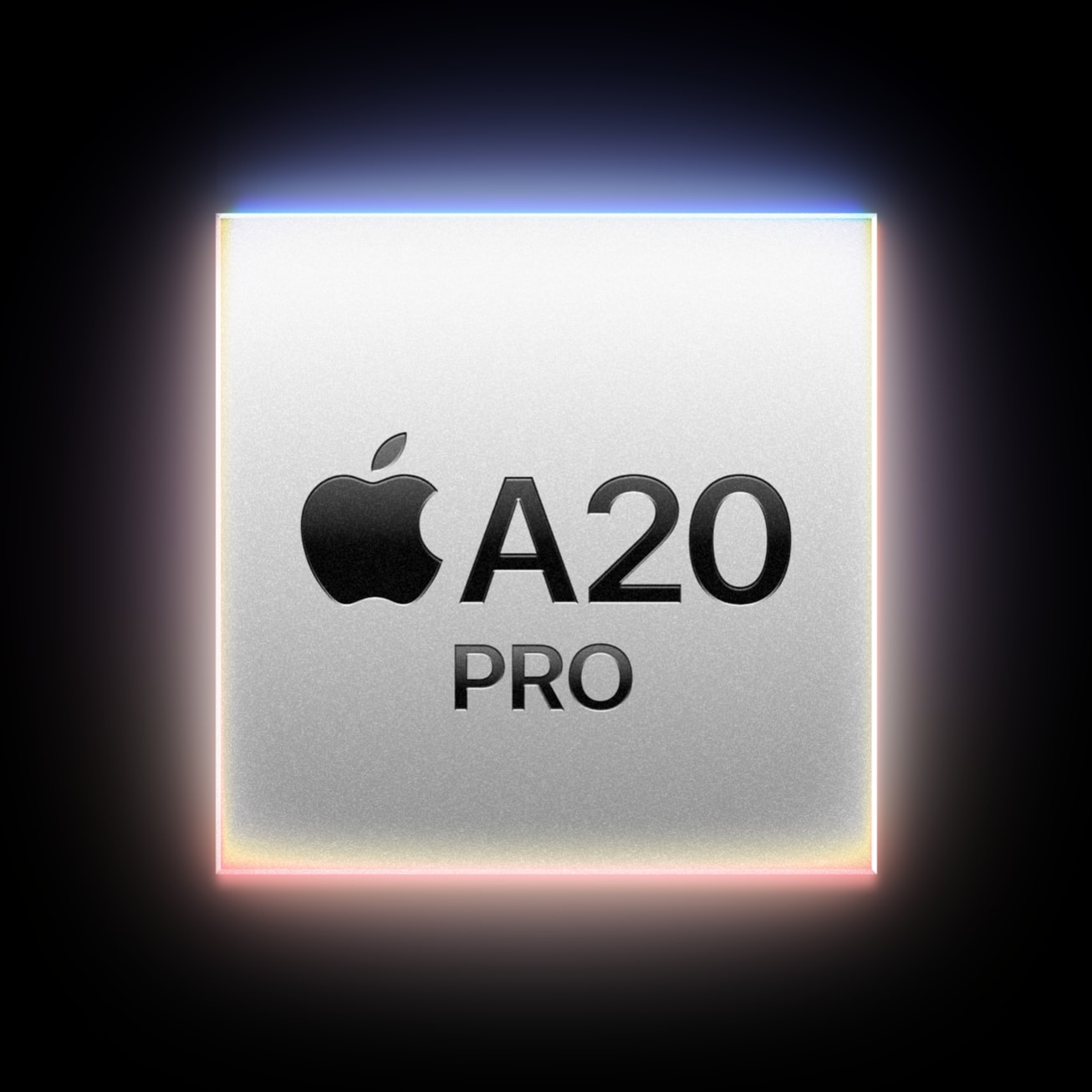
The iPad mini is the bigger redesign of the day. It moves to an 8.5-inch OLED display with more than 2x the peak brightness of the previous model, gains water and dust resistance, and puts a 12MP Center Stage camera on the landscape edge, which is where it belongs for video calls. It runs A20 Pro and starts at 699 dollars for Wi-Fi and 849 with cellular.
Pre-orders cover 35 countries for the Macs and 36 for the iPad mini. Indian pricing is not in the United States releases, and Apple's India store is where it will land.
What to watch
- Independent benchmarks, which arrive in the week after the 6 November ship date and are the only way to compare these machines with each other or with anything else.
- The memory question. 16GB standard is an improvement for anyone coming from an older base model, and 32GB is a low ceiling for a machine sold partly on local AI.
- Whether a Pro or Max version of M6 follows, and when, because the 16-inch line and the high-end configurations now sit a generation behind the entry Pro.
- Battery claims against real use. The 24-hour figure is Apple's own measurement under its own workload, as every such figure is.
- Local pricing and the trade-in arithmetic, which is where the difference between the headline number and what anybody actually pays lives.
What is not established
- How M6 compares to anything outside Apple's own line. No independent result exists yet.
- What the phrase about the world's fastest CPU core rests on. It is footnoted to Apple's own testing, and the footnote is the claim's whole support.
- Whether the 24-hour battery figure holds outside Apple's test workload.
- Whether a 16-inch MacBook Pro, or Pro and Max versions of M6, are coming this cycle. Nothing was announced, and nothing was ruled out.
- What any of this costs in India, where the release does not say.